What Is Sea Glass? The Story Behind Every Kamaya Piece
Pick up a piece of sea glass and hold it to the light. It's smooth, frosted, and softer than any gemstone that came out of a mine. That softness took decades to earn, sometimes on the other side of the world, before it ended up quietly on a Balinese shoreline.
At Kamaya, sea glass is the material everything else is built around. People ask us what it actually is more often than you'd think, so here's the honest answer.
Glass, Meet the Ocean
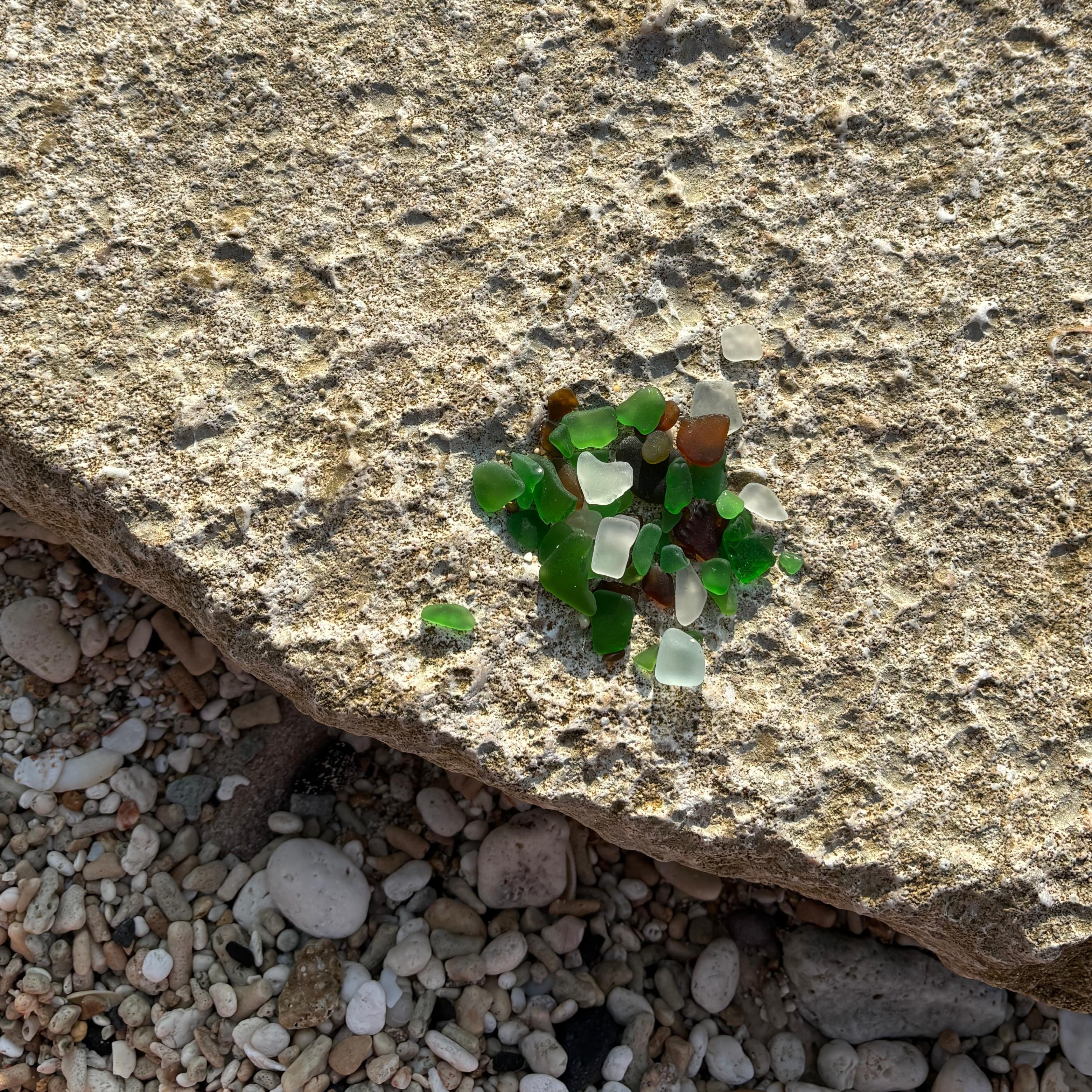
Sea glass starts as ordinary glass: bottles, jars, windows, dishware. Once it ends up in the ocean, something slow takes over. Waves tumble it against sand and rock, year after year. Saltwater etches the surface. The sharp edges round off. The clarity gives way to a soft, frosted finish.
The whole process takes 20 to 100 years. By the end, the ocean has claimed a piece of trash and handed back something else entirely.
Why It's Rare, and Getting Rarer
As the world shifted to plastic packaging, less glass made it into the ocean. Genuine sea glass has been getting harder to find every decade since. The most sought-after colors, deep cobalt blue, amber, red, come from old medicine bottles, antique glassware, and early car tail lights. Finding even one piece of red sea glass on a beach today is rare.
We source every piece ourselves and check that it's been tumbled by the sea, not faked in a machine. What you're holding is the real thing.

Why No Two Pieces Match
The ocean doesn't run a production line. Every fragment it returns is a different shape, a different size, a slightly different shade, even within the same color family. Two pieces of cobalt sitting side by side will still catch the light differently.
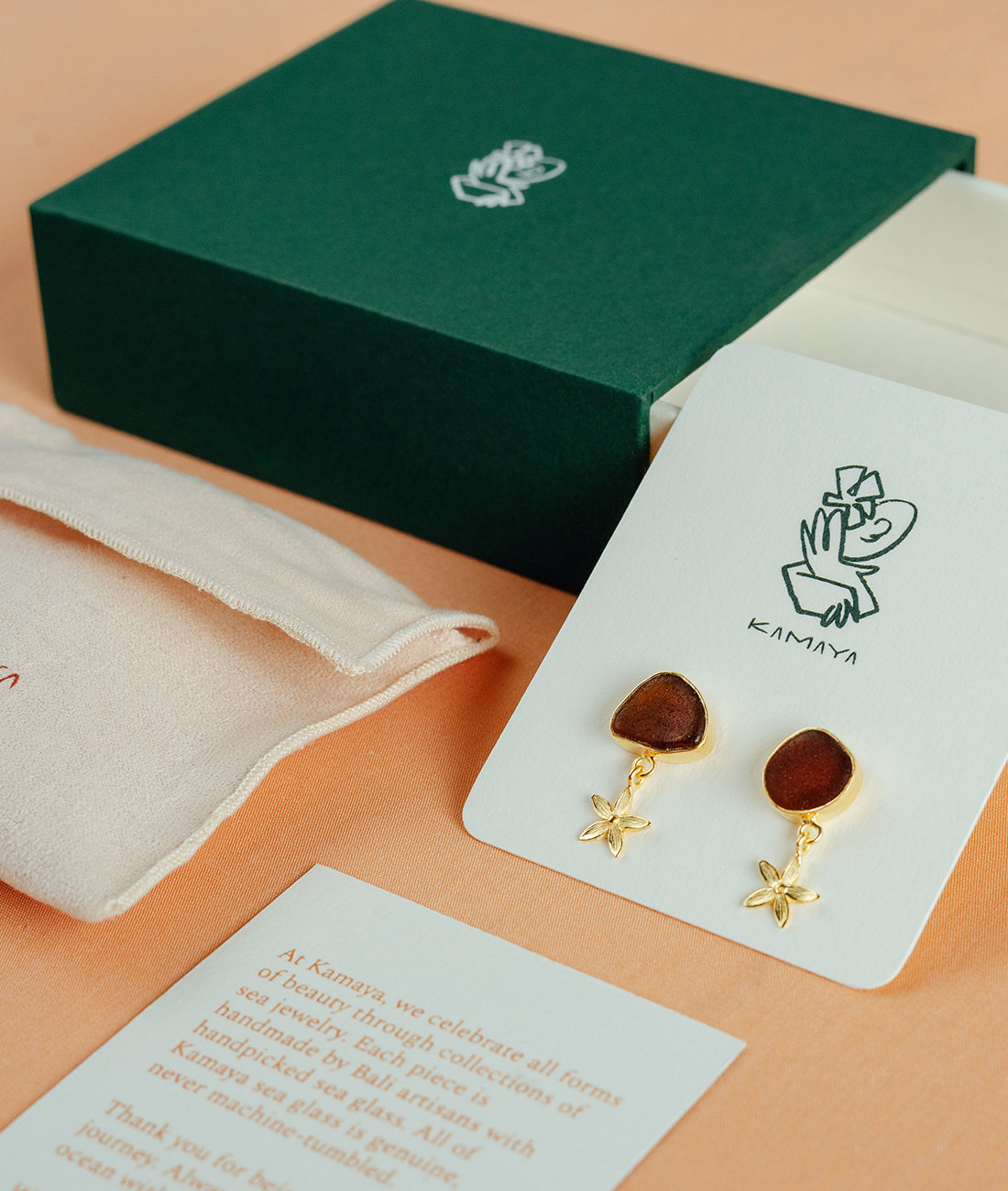
That's why every Kamaya piece is one of one. Not a tagline, just how the material works. When our artisans set a piece of sea glass into sterling silver 925 or gold-plated silver, they're shaping metal around something that doesn't exist anywhere else.
Made in Bali, Worn Worldwide
Bali has one of the world's oldest silversmithing traditions, and our artisans bring that history to every setting. Each one is shaped by hand around the specific piece of glass it holds, which means no two settings match either. What you end up with is a piece carrying two histories: one written by the ocean, one by the hands that finished it.

Wearing a Kamaya piece means wearing something that took the sea decades to shape and a craftsperson an afternoon to finish. There isn't really an equivalent to that anywhere else.
You'll find the full collection in our stores in Ubud and Nusa Lembongan, or online at shopkamaya.com, shipping worldwide.